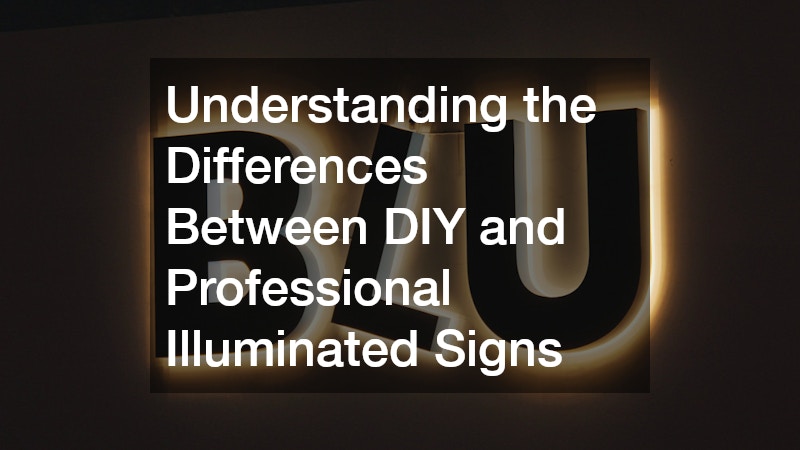

Businesses rely on eye-catching displays to attract attention, reinforce their branding, and make a strong first impression. Among the many options available, illuminated signs stand out because they remain visible during the evening, in poor weather, and in other low-light conditions. While some business owners consider creating their own signage to save money, others recognize the value of working with experienced professionals who understand design, materials, and installation.
Choosing between a do-it-yourself approach and professional fabrication involves more than comparing upfront costs. Durability, safety, appearance, maintenance, and long-term performance all play important roles in determining which option delivers the greatest value.
Understanding these differences can help you make an informed decision that supports your business goals.
Comparing Design Quality and Customization
One of the biggest distinctions between DIY projects and professionally made signage is the level of design quality. Many do-it-yourself kits provide limited templates, standard fonts, and basic lighting components. While these options may work for temporary displays or personal projects, they often lack the polished appearance businesses need to establish a memorable brand identity.
Professional sign companies begin by evaluating your brand, building layout, visibility requirements, and target audience. They can recommend lettering styles, color combinations, lighting configurations, and materials that complement your existing branding while ensuring the finished product is easy to read from various distances. Every design choice contributes to creating a cohesive appearance that helps customers recognize your business.
Customization is another important advantage. DIY solutions typically require working within the limitations of available kits, making it difficult to create a truly unique display. Professional manufacturers can produce custom lettering, dimensional elements, specialty lighting effects, and distinctive shapes that reflect your company’s personality. This flexibility allows businesses to stand apart from nearby competitors.
Evaluating Durability, Safety, and Installation
Construction quality significantly affects how well a sign performs over time. DIY projects often rely on consumer-grade materials that may not withstand prolonged exposure to rain, snow, direct sunlight, or fluctuating temperatures. Moisture intrusion, fading, and electrical issues can develop much sooner when lower-quality components are used.
Professional fabricators select commercial-grade materials specifically designed for outdoor use. Weather-resistant finishes, durable framing systems, high-quality lighting components, and properly sealed electrical connections help extend the lifespan of the installation while maintaining its appearance. This added durability reduces the likelihood of premature repairs or replacements.
Installation is another area where professional experience provides substantial benefits. Mounting a lighted display involves more than attaching it to a wall. Structural support, electrical wiring, local building codes, and proper placement all influence safety and performance. Improper installation can create hazards for both customers and employees while increasing the risk of damage during severe weather.
Professionals also understand permitting requirements and local regulations that may govern size, brightness, placement, or electrical connections. Completing the installation correctly from the beginning helps avoid costly modifications, code violations, or unexpected delays. When businesses invest in professionally installed illuminated signs, they gain confidence that the finished product has been designed and installed with long-term reliability in mind.
Considering Long-Term Value and Maintenance
Many business owners initially focus on the lower upfront cost of a DIY project. While purchasing materials independently may seem economical, unexpected expenses can quickly accumulate. Design revisions, replacement components, installation tools, and future repairs often increase the total investment beyond original expectations.
Professional signage generally requires a larger initial investment, but it frequently delivers greater long-term value. Higher-quality materials, precision manufacturing, and expert installation contribute to a longer service life with fewer maintenance concerns. A professionally built display is also more likely to retain its appearance over many years, helping businesses present a polished image without frequent upgrades.
Professional manufacturers often design their products with serviceability in mind, making routine maintenance and component replacement more straightforward when necessary. They can also provide ongoing support, inspections, and repairs that help maximize performance throughout the sign’s lifespan. Investing in professionally produced illuminated signs often reduces maintenance demands while providing dependable visibility that continues supporting your business day after day.
Both DIY and professional signage solutions have their place, depending on the project’s purpose, budget, and expected lifespan. A simple temporary display may be suitable for a do-it-yourself approach, while permanent business signage typically benefits from professional design, construction, and installation. Considering factors such as appearance, durability, safety, customization, and maintenance helps ensure your investment aligns with your long-term objectives.